

 English
 Pусский
 한국어
한국어 ไทย
ไทย
Five-compartment
The five-compartment design is a structured system often used in storage, organization, or packaging to separate items into clearly defined sections. Each of the five compartments serves a specific function, allowing users to categorize, protect, and access contents more efficiently. This configuration can be applied to physical containers, modular furniture, toolkits, product packaging, or even digital interfaces that mimic physical organization.In a typical physical application, the five-compartment structure may be arranged in a linear, grid, or radial layout. The layout is chosen according to the space available and the type of items being stored. For example, a long, narrow tray with five equal sections is suitable for tools, cutlery, or stationery, while a more square arrangement might be used for components, samples, or small devices. Dividers between compartments are usually rigid enough to prevent mixing of contents, but may be removable to offer flexibility.Functionally, a five-compartment system helps with classification. Each section can be assigned to a specific category, size range, or stage in a workflow. In a workshop, one compartment might hold frequently used tools, another spare parts, and others cleaning items or safety accessories. In a medical or laboratory context, the compartments can separate instruments, consumables, samples, or documentation to reduce cross-contamination and confusion.From a design perspective, key considerations include material, durability, ease of cleaning, and visibility. Transparent or semi-transparent walls allow quick identification of contents. Labels or color coding on each compartment enhance clarity, especially when multiple users share the same system. The compartments can be equal in size for standardized storage, or deliberately varied to match the dimensions of particular objects, such as long instruments or bulky components.In digital or conceptual use, the idea of five compartments can guide information architecture. An interface may divide content into five main sections, each representing a core function or topic. This structure simplifies navigation and encourages users to think in terms of clear categories. The same principle can be used in project management, where tasks are grouped into five phases or priority levels, each “compartment” representing a different stage or focus.Overall, the five-compartment approach balances simplicity and versatility. It is more structured than a single open space, yet not as complex as systems with many small divisions. This makes it suitable for environments that demand both order and rapid access, from homes and offices to industrial, technical, or clinical settings.
Produk
Kategori:
-
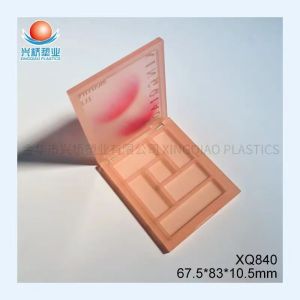
Five-compartment eyeshadow palette with brush compartment packaging
Klasifikasi mereka: Palet EyeshadowTampilan: 368Nomor:Waktu rilis: 2026-01-20 04:15:15Five-compartment eyeshadow palette with brush compartment packaging
Berita
Kategori:
Tidak ada hasil pencarian!
Kasus
Kategori:
Tidak ada hasil pencarian!
Video
Kategori:
Tidak ada hasil pencarian!
Download
Kategori:
Tidak ada hasil pencarian!
Rekrutmen
Kategori:
Tidak ada hasil pencarian!
Produk yang direkomendasikan
Tidak ada hasil pencarian!
 Ponsel: +008613868982062
 Faks: +86-579-82196656
 Situs web:
 Alamat: tidak. 377, Jalan Yongxue, distrik kota w U, kota jin, provinsi Z Hejiang



 Telepon