

Cosmetic packaging for travel and portability has become a core segment of the beauty and personal care industry.
Travel‑size cosmetic packaging, portable cosmetic containers, and on‑the‑go beauty packaging solutions are now
essential for brands that want to serve consumers who are mobile, minimalist, and constantly on the move.
This comprehensive guide explains definitions, industry standards, benefits, technical specifications, and
design considerations for cosmetic travel packaging.
Cosmetic packaging for travel and portability refers to all types of containers and components specifically
designed for convenient carrying, transportation, and use of cosmetics and personal care products outside the home.
This category covers travel‑size bottles, mini jars, compact tubes, portable sprays, stick formats, and
Multifunctional beauty packaging solutions that optimize space, weight, safety, and usability on the go.
In search engines, related high‑intent keywords include:
Optimizing packaging for travel means balancing multiple factors: regulatory compliance, durability, leak
resistance, portion control, branding, sustainability, consumer convenience, and cost efficiency.
Cosmetic packaging for travel and portability can be defined as:
A specialized category of cosmetic and personal care packaging engineered to be compact, lightweight,
secure, and compliant with travel regulations, enabling safe transportation and convenient application of beauty
products in transit, on trips, or during daily commuting.
The focus is on functionality and protection in mobile environments:
vibration, pressure changes, limited storage space, and frequent handling.
Cosmetic packaging for travel and portability must accomplish all standard cosmetic packaging functions with
additional travel‑specific requirements.
Cosmetic packaging for travel and portability is influenced by global travel patterns, urbanization, e‑commerce,
and consumer preferences for convenience and sustainability.
When properly designed, cosmetic packaging for travel and portability provides benefits to brands, retailers,
and end users.
Travel‑friendly cosmetic packaging spans many formats. The table below summarizes common packaging types used
for portable cosmetics and personal care products.
| Packaging Type | Typical Volume Range | Main Applications | Key Travel Features |
|---|---|---|---|
| Mini bottles (screw cap / flip‑top) | 10–100 ml | Shampoo, shower gel, lotion, toner | Compact, refillable, easy pouring |
| Travel tubes (squeeze, tottle) | 5–75 ml | Creams, gels, sunscreens, cleansers | Flexible, light, controlled dosing |
| Airless mini pumps | 5–50 ml | Serums, eye cream, high‑value skincare | Air protection, precise dosing, hygienic |
| Stick packaging | 3–30 g | Lip balm, solid perfume, sunscreen, deodorant | Solid format, spill‑proof, pocket friendly |
| Compact cases | 2–20 g | Pressed powder, foundation, blush | Mirror, applicator, impact‑resistant |
| Roll‑on bottles | 5–50 ml | Deodorant, perfume, eye gel | Targeted application, minimal waste |
| Mist sprayer bottles | 10–100 ml | Face mist, hair mist, fragrance, sanitizer | Fine spray, convenient refreshing |
| Sample sachets | 1–10 ml | Single‑use creams, masks, shampoo | Ultra‑light, flat, disposable |
| Palette and multi‑compartment kits | Varies | Makeup sets, travel kits | Multi‑product, space saving |
| Magnetic or snap‑on travel cases | Custom | Refill pans, modular sets | Customizable, reusable, refillable |
Mini bottles and travel bottles are widely used for liquid cosmetics:
shampoos, conditioners, body wash, toner, micellar water, and liquid cleansers.
Tubes are a flexible and widely adopted format for travel and portable cosmetic packaging.
Tottles (upside‑down standing tubes) allow thick formulas to be dispensed easily.
Airless mini pumps and airless travel bottles protect sensitive formulas from oxidation and contamination.
They are popular for high‑value skincare such as anti‑aging serums, eye treatments, and dermocosmetic products.
Solid formats are inherently travel‑friendly because they contain little or no free liquid, reducing spill risk.
Stick packaging and solid bars are increasingly used for portable beauty.
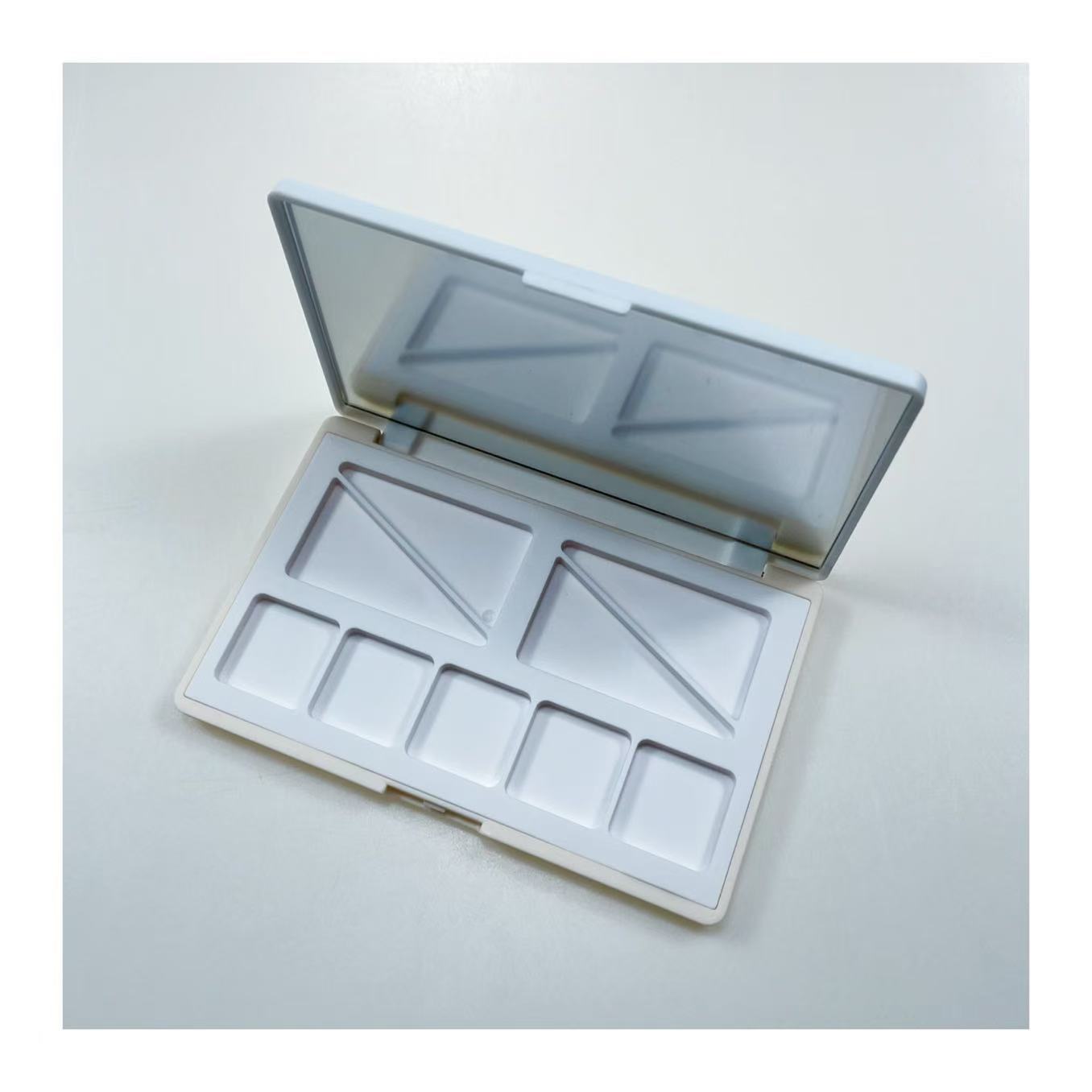
Compact cases with mirrors and integrated applicators are a classic cosmetic packaging solution for travel
and portability in the makeup segment.
Sachets and unit‑dose packs provide extremely lightweight and compact formats for short trips or sampling.
The choice of material for cosmetic packaging for travel and portability influences weight, durability, aesthetics,
barrier properties, recyclability, and cost. The most common materials are plastics, glass, metals, and flexible laminates.
| Material | Typical Usage | Key Advantages for Travel | Limitations | Recyclability |
|---|---|---|---|---|
| PET (Polyethylene Terephthalate) | Bottles for liquids and sprays | Lightweight, clear, good impact resistance | Limited resistance to very high temperatures | Widely recyclable in many markets |
| HDPE (High‑Density Polyethylene) | Bottles, tottles, jerry‑type mini packs | Robust, chemical‑resistant, opaque for light‑sensitive formulas | Less Transparent, design options slightly limited | Widely recyclable |
| PP (Polypropylene) | Tubes, caps, sticks, jars | Lightweight, good fatigue resistance for hinges | Transparency lower than PET; can warp at high heat | Recyclable in many regions |
| Glass | Mini perfume bottles, serums, oils | Premium feel, excellent barrier, inert | Breakage risk, heavier, may not suit all travel contexts | Highly recyclable |
| Aluminum | Tubes, bottles, tins | Lightweight, strong, high barrier, premium perception | Can dent; may require internal coatings | Widely recyclable |
| ABS / SAN / Acrylic | Caps, jars, decorative parts | High clarity, luxury appearance | Heavier, recyclability challenges | Varies; often down‑cycled |
| Flexible Laminates | Sachets, pouches, multi‑layer tubes | Very light, excellent barrier, small storage volume | Difficult to recycle, often single‑use | Limited; mono‑material designs are emerging |
Plastics dominate the travel cosmetic packaging segment due to their combination of light weight, resilience,
and design flexibility. PET and HDPE are especially common for bottles. PP is often used for flip‑top caps,
hinges, sticks, and jars.
For premium travel‑size products such as fragrance, facial oils, and upscale serums, glass offers a luxurious and
inert container. To improve portability:
Aluminum and tinplate are used for travel tins, deodorant sticks, balms, and solid shampoo bars.
Metals provide high barrier performance and a distinct tactile feel while remaining relatively lightweight.
As sustainability becomes crucial in cosmetic packaging for travel and portability,
brands explore:
A key feature of cosmetic packaging for travel and portability is regulatory compatibility with air travel
and safety standards. Packaging must be designed to comply with international and local regulations where
products are sold and transported.
Many aviation security rules limit the volume of liquids in carry‑on luggage. While exact rules can vary by
region and over time, a widely adopted standard for carry‑on liquids is:
Cosmetic packaging for travel and portability frequently uses 10 ml, 15 ml, 30 ml,
50 ml, and 100 ml formats to align with these requirements.
Travel‑size cosmetic packaging is subject to the same labeling rules as standard sizes in most jurisdictions:
Due to limited printing area, some travel packaging may use folded labels, peel‑back labels, or minimal
text with external documentation or digital access via QR codes.
Materials used in travel and portable cosmetic packaging must comply with:
Effective cosmetic packaging for travel and portability follows specific design principles
that combine mechanical performance with user experience.
One of the most critical aspects of cosmetic packaging for travel and portability is
ensuring that containers remain sealed under movement and pressure changes.
Although small, travel and portable cosmetic packaging should retain brand identity:
Cosmetic packaging for travel and portability must be validated through rigorous testing to
ensure performance in real‑world travel conditions.
Cosmetic packaging for travel and portability serves multiple product categories:
skincare, haircare, body care, color cosmetics, and fragrances.
Skincare is one of the most demanding segments in terms of travel packaging.
Typical portable packaging choices include:
The technical parameters of cosmetic packaging for travel and portability are defined by volume, dimensions,
material thickness, closure systems, and decoration methods. The following table summarizes typical specification
ranges used across the industry.
| Packaging Type | Standard Volume Options | Approx. Height Range | Neck / Closure Type | Notes |
|---|---|---|---|---|
| Travel PET bottle | 10 / 20 / 30 / 50 / 100 ml | 50–130 mm | 18/410, 20/410, 24/410 | Compatible with screw caps, flip‑tops, pumps |
| Mini tube (PP / PE) | 5 / 10 / 15 / 20 / 30 / 50 ml | 40–120 mm | Flip‑top or screw cap | Round or oval cross‑section |
| Airless pump bottle | 5 / 10 / 15 / 30 / 50 ml | 60–130 mm | Snap‑on or screw pump | Single or double wall construction |
| Stick container | 3 / 5 / 10 / 15 / 20 / 30 g | 50–90 mm | Twist‑up mechanism | Round or oval, with cap and base |
| Compact powder case | 5 / 8 / 10 / 12 / 15 / 20 g | 12–22 mm thickness | Snap closure, often with mirror | Single or multi‑pan layouts |
| Roll‑on bottle | 5 / 10 / 20 / 30 / 50 ml | 50–110 mm | Ball fitment with screw cap | Plastic or glass body with PP ball housing |
| Mist sprayer bottle | 10 / 20 / 30 / 50 / 100 ml | 60–140 mm | Fine mist spray pump | Often PET or glass with protective cap |
| Sachet / pouch | 1–10 ml | Varies by design | Heat sealed edges | Single use; multi‑layer films |
To achieve both durability and lightweight performance, cosmetic packaging for travel and portability
typically uses optimized wall thicknesses:
Despite smaller surface areas, travel‑size containers can use many of the same decoration technologies as
standard products:
Sustainable design is especially important for cosmetic packaging for travel and portability because small
containers are often disposed of after short usage periods. The industry increasingly focuses on lowering
environmental impact without compromising convenience and safety.
To support responsible use, packaging can:
Travel cosmetic kits combine several products in coordinated packaging for convenience and branding.
These sets are a major application of cosmetic packaging for travel and portability.
Primary travel containers are often packed in pouches, bags, or boxes:
When designing or selecting cosmetic packaging for travel and portability, brands and packaging developers
need to balance marketing, technical, and regulatory requirements.
For online visibility, content focused on cosmetic packaging for travel and portability can be structured
around specific keyword themes and long‑tail search queries. The following subtopics are frequently searched
and align with the information in this guide:
The most common volumes for cosmetic packaging for travel and portability are 10 ml, 15 ml,
30 ml, 50 ml, and 100 ml for liquids and creams, and 3 g to 20 g for solid and stick
products. These sizes balance convenience, regulatory compliance, and cost.
Leak prevention involves a combination of material selection, closure engineering, and quality control.
Reliable thread design, correct application torque, liners or gaskets, locking mechanisms, and strict
leak testing protocols are essential to keep travel‑size cosmetic packaging secure during transport.
Refillable travel cosmetic packaging can significantly reduce the environmental impact by lowering the number
of single‑use containers. When designed for durability and ease of cleaning, refillable solutions support
both sustainability and consumer cost savings.
Major challenges include ensuring leak‑proof performance under variable conditions, providing sufficient
labeling space, balancing lightweight design with structural integrity, achieving regulatory compliance, and
integrating sustainability without compromising user experience.
Cosmetic packaging for travel and portability is a dynamic field that intersects consumer lifestyle trends,
regulatory frameworks, material science, and brand strategy. Effective travel‑size cosmetic packaging
protects formulas, optimizes space and weight, and provides a convenient, secure experience for users on the
move, while also offering brands additional channels for growth and differentiation.
By understanding packaging types, materials, regulations, specification ranges, and design principles,
stakeholders can develop robust, travel‑friendly cosmetic solutions that meet the expectations of modern,
mobile consumers and align with long‑term sustainability objectives.
```
Jinhua Xingqiao Plastik Industry Co, Ltd.
 Ponsel: +008613868982062
 Telepon: +86-579-82196667
 Faks: +86-579-82196656
 E-mail:penjualan@zjxqpackaging.com
 Situs web:http://www.zjxqpackaging.com
 Alamat: tidak. 377, Jalan Yongxue, distrik kota w U, kota jin, provinsi Z Hejiang
Hak Cipta © 2022 Jinhua Xingqiao Plastic Industry Co., Ltd
Situs web ini menggunakan cookie untuk memastikan Anda mendapatkan pengalaman terbaik di situs web kami.

 English
 Pусский
 한국어
한국어 ไทย
ไทย



 Telepon
Komentar
(0)