

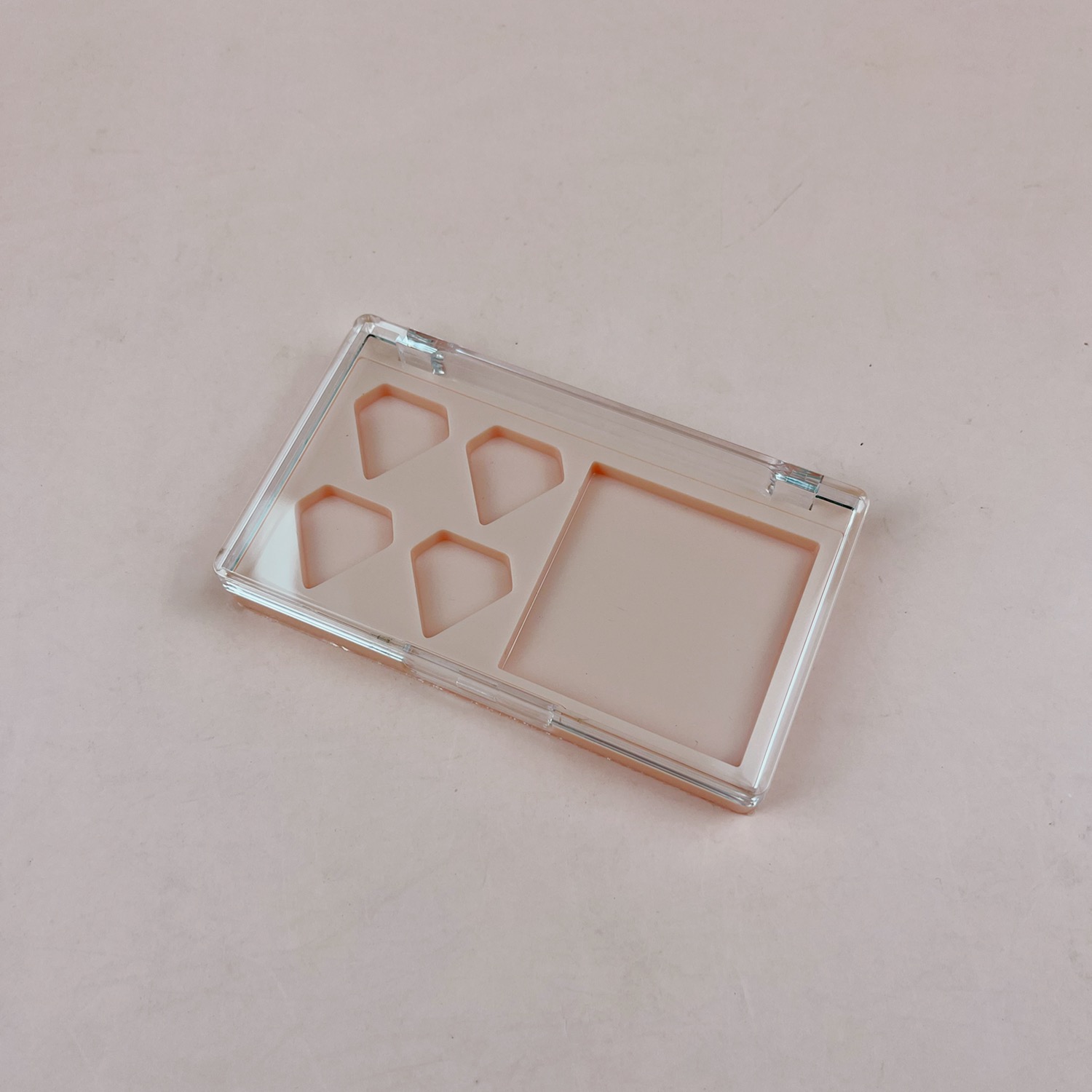
Compact Powder Case Design Trends 2025: Engineering Insights for B2B Manufacturers
Industry BackgRound and Market Demand
The global compact powder case market is evolving rapidly, driven by consumer demand for sustainable, functional, and aesthetically refined packaging. By 2025, the cosmetics industry is projected to exceed $500 billion, with compact powders maintaining a significant share due to their portability and convenience.
B2B manufacturers face increasing pressure to innovate, balancing cost-efficiency with eco-conscious materials and smart design. Key market drivers include:
- Sustainability mandates (e.g., EU plastic regulations)
- Customization needs (brand differentiation through modular designs)
- Smart packaging integration (RFID, NFC for anti-counterfeiting)
Core Concepts and Key Technologies
1. Modular Design Systems
Modularity allows brands to interchange components (pans, mirrors, applicators) without redesigning the entire case. This reduces tooling costs and accelerates time-to-market.
2. Advanced Material Science
- Biopolymers (PLA, PHA): Compostable alternatives to ABS plastic.
- Recycled Aluminum: lightweight, corrosion-resistant, and infinitely recyclable.
- Ceramic-Coated Metals: Scratch-resistant finishes with premium aesthetics.
3. Precision Manufacturing
- Micro-injection molding enables ultra-thin walls (<0.5mm) for weight reduction.
- Laser etching replaces traditional printing for zero-VOC branding.
Product Structure, Performance, and Materials
Structural Innovations
- Magnetic Closure Systems: Eliminate hinges, reducing mechanical failure risks.
- Snap-Fit Pans: Secure powder refills without adhesives, simplifying recycling.
Performance Metrics
- Drop Resistance: ≥1.5m impact tolerance (ASTM D5276).
- Seal Integrity: IPX4-rated against humidity ingress.
Material Selection Criteria
| Material | Pros | Cons |
|----------|------|------|
| Biopolymers | Carbon-neutral, FDA-compliant | Higher cost, limited heat resistance |
| Recycled pet | Cost-effective, high clarity | Lower impact strength |
| Aluminum | Lightweight, premium feel | Requires protective coatings |
Critical Factors Affecting Quality
1. Wall Thickness Consistency: Variations >0.1mm cause warping or brittleness.
2. Hinge Durability: Cyclic testing (10,000+ openings) ensures longevity.
3. Surface Finish: Matte coatings reduce fingerprint visibility but require UV stabilization.
Supplier Selection Standards
- ISO 13485 Certification: Critical for medical-grade compact cases (e.g., SPF powders).
- Localized Sourcing: Proximity to raw material suppliers cuts lead times by 30–50%.
- Tooling Capabilities: Suppliers with multi-cavity molds (8+ cavities) optimize high-volume production.
Industry Pain Points and Solutions
1. Sustainability vs. Cost
Challenge: Biodegradable materials can increase unit costs by 15–20%.
Solution: Hybrid designs (e.g., recycled PET base + biopolymer lid) balance cost and eco-compliance.
2. Counterfeit Prevention
Challenge: Luxury brands lose ~$3B annually to counterfeit compacts.
Solution: Embedded NFC tags with tamper-evident seals.
Application Scenarios
- Luxury Brands: Ceramic-coated cases with gold-plated accents (e.g., Chanel, Dior).
- Mass Market: Injection-molded PP cases with snap-fit refills (e.g., Maybelline, L’Oréal).
- Clean Beauty: Monomaterial cases (100% PCR aluminum) for zero-waste compliance.
Current Trends and 2025 Outlook
1. Circular Design: Fully disassemblable cases for easy material recovery.
2. Active Packaging: Humidity-control silica gel integrated into case walls.
3. AI-Driven Customization: 3D-printed cases tailored to skin tone or brand logos.
FAQs
Q: How do magnetic closures compare to mechanical hinges in durability?
A: Magnets (e.g., NdFeB) last 50,000+ cycles vs. hinges at 20,000 cycles but require precise alignment tolerances (±0.2mm).
Q: Which biopolymer is best for high-end compact cases?
A: PHA offers superior heat resistance (up to 120°C) vs. PLA (60°C), making it ideal for metalized finishes.
Q: How can brands reduce tooling costs for SMALL batches?
A: Rapid tooling (soft steel molds) cuts costs by 40% for runs under 50,000 units.
---
This analysis underscores the intersection of engineering precision, material innovation, and regulatory compliance shaping compact powder case design. Manufacturers prioritizing modularity, sustainability, and smart features will lead the 2025 market.
Jinhua Xingqiao Plastik Industry Co, Ltd.
 Ponsel: +008613868982062
 Telepon: +86-579-82196667
 Faks: +86-579-82196656
 E-mail:penjualan@zjxqpackaging.com
 Situs web:http://www.zjxqpackaging.com
 Alamat: tidak. 377, Jalan Yongxue, distrik kota w U, kota jin, provinsi Z Hejiang
Hak Cipta © 2022 Jinhua Xingqiao Plastic Industry Co., Ltd
Situs web ini menggunakan cookie untuk memastikan Anda mendapatkan pengalaman terbaik di situs web kami.

 English
 Pусский
 한국어
한국어 ไทย
ไทย



 Telepon
Komentar
(0)